
Radon Mitigation System Installation in Calgary: A Complete Guide for Canadian Homeowners
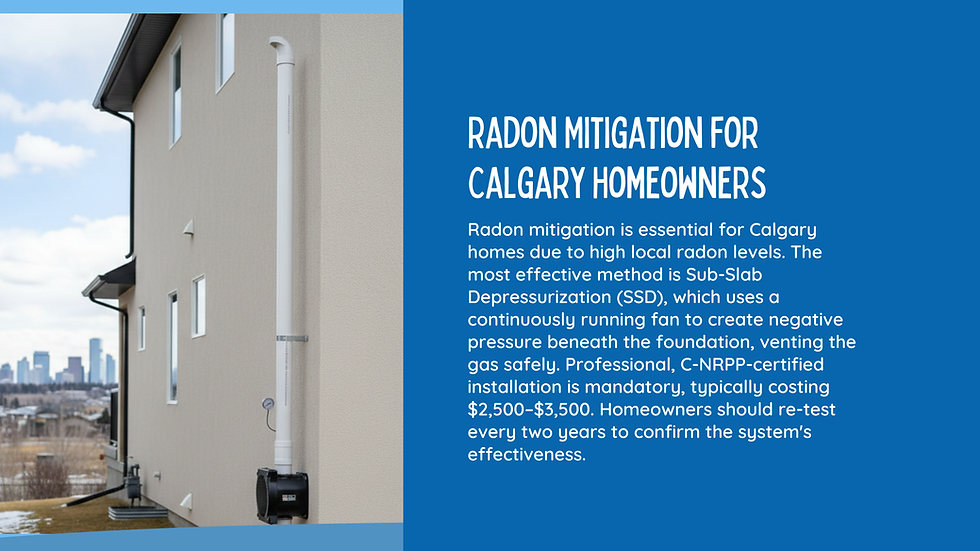
Introduction: Why Radon Mitigation Matters in Calgary Homes
Calgary has the highest Radon levels in Canada. This is mainly due to both the local geology and the colder climate. This region is home to many residences that have to be sealed for the long winter months. A proper Radon mitigation system installation is the most effective and beneficial thing a Calgary homeowner can do to improve indoor air quality. Since Radon is the second largest contributor of lung cancer in Canada and results in over 3500 deaths per year, it is essential to take action when levels are over 200 Bq/m³. With Radon levels consistently over 200 Bq/m³, it is more than justified for concerned individuals to take action to improve indoor air quality. Health Canada and long-standing Calgary home Radon test results suggest that improving indoor air quality through a mitigation system is feasible.
What Are The Basics Of a Radon mitigation system installation?
By definition, a Radon mitigation system installation is engineered professionally to bring down the levels of Radon gas in the air in your living quarters. In Alberta homes, mitigation attempts to reduce the pressure beneath the slab to prevent Radon gas from entering the house.
Why Testing Must Be Done First in Radon Mitigation System Installation
Before any mitigation systems are installed, long-term Radon Mitigation System Installation and testing is very important. When it comes to testing Calgary homes, there is usually slab-on-grade construction and a stack effect, so it is common to pull more Radon from the surrounding soil. Radon can enter your home through various locations, such as floor drains, construction joints, and even porous concrete. This testing determines whether you need to mitigate Radon and should be used as a guide for the scope of the installation.
Sub-Slab Depressurization is the most crucial Radon mitigation system installation
Sub-Slab Depressurization is the most effective technique for reducing Radon in the Canadian market, and in Calgary, it is used in over 95% of houses. This technique involves creating a condition in which the air pressure beneath the slab is lower than inside the home. If maintained, it does not allow Radon to enter the house but instead gets sucked into the pipelines of the mitigation system. The Calgary sub-slab depressurization systems work particularly well because most homes in the area have either basements or slab-on-grade floor systems, which allow for predictable airflow beneath the slab.
Radon mitigation system installation and its role in the reduction of Radon
The Radon mitigation system installation in every Calgary sub-slab depressurization system is a Radon mitigation fan. This system runs continuously and maintains the constant negative pressure required for the Radon mitigation technique to work.
Installation and Diagnostics: Radon mitigation system installation is performed
They use tools such as manometers, pressure field extension tests (measured with a manometer), and smoke pencils to verify and assess the system's proper functioning. Hiring a certified professional guarantees compliance with national Radon mitigation system installation guidelines and Health Canada standards.
Ongoing System Maintenance and Post-Installation Radon mitigation system installation
Once the Radon mitigation system installation system has been installed, homeowners should conduct a long-term Radon test to ensure the system is functioning as intended. According to Health Canada guidelines, people should test for Radon every 2 years, after each major renovation, and with each Radon mitigation fan replacement. The maintenance of such systems is minimal, mainly consisting of periodic checks of the manometer (pressure gauge) and ensuring the fan is operational. Depending on operational pace and exposure to cold weather, the average lifespan of these fans in Canada is 7-10 years.
The Average Cost Calgary Residents Can Expect for Radon Mitigation System Installation and Installation Timeframes.
In Calgary, the average price for a Radon mitigation system is $2,500 to $3,500, depending on the type of foundation, the piping path, and the system's overall difficulty. More expensive systems are required for larger homes and homes with multiple suction points. Radon mitigation system installation typically takes between 3 and 6 hours and does not require the homeowners' absence. Due to the range of housing types in Calgary, from older homes to newly constructed energy-efficient homes, calibrated assessments by professionals are a prerequisite to ensure that the system installation is appropriate for the home's specific Radon entry point.
Transparent pricing without hidden costs
Ability to provide references or before/after Radon results
A qualified Calgary Radon mitigation system installation contractor is knowledgeable about cold-weather considerations and proper vent placement, and is not equipped with exterior piping that is at risk of winter freeze-ups.
Calgary Families and Long-Term Indoor Air Safety
Mitigating Radon is one of the most necessary steps towards achieving quality indoor air in Calgary homes. Beyond the health of your family, the protection of your investment, and the value of your home are also benefits to consider.
Questions Families Ask About Radon Mitigation
How long does the Radon mitigation system installation take?
Most Calgary installations take 3–6 hours, depending on system complexity.
Does installation mean there’s no need to retest my home?
No. Following the installation, Health Canada recommends long-term testing, with retesting every 24 months thereafter.
How much maintenance do Radon mitigation systems need?
Very little maintenance is needed. Homeowners should check that the fan is running and make sure that the pipes are free of obstructions.
Can homeowners install the mitigation system themselves?
DIY systems are not permitted in Canada. Only C-NRPP–certified professionals can provide the needed diagnostics and ensure compliance.
Do insurance or grants in Alberta cover Radon mitigation costs?
Home insurance does not usually cover mitigation. Grant availability varies from year to year, but some Canadian lung health organizations provide rebate programs sporadically.
Is Radon mitigation required by Alberta building codes?
New homes in Alberta must include Radon rough-ins in the building code, but no complete system installation is required unless elevated Radon levels are present.


Comments